- Medical board: Held by a Special Medical Board (SMB) at an Armed Forces hospital, only after you are recommended at SSB. Appeal (AMB) and Review (RMB) available.
- Three wings, three standards: NDA Army is the most relaxed on vision, Navy is intermediate, Air Force Flying is the strictest (no myopia, CP-I colour, 162.5 cm minimum).
- Most common rejections: Vision/refraction errors, deviated nasal septum, hydrocele/varicocele, dental issues, knock knees, flat feet, tattoos in wrong locations, hypertension, dermatological conditions.
- You can prepare: Many "rejection" defects (DNS, varicocele, weight, wax, dental caries, mild hyperhidrosis) are rectifiable before the medical board.
NDA has three wings — pick the right standard
NDA candidates choose one of three wings at application: Army (NDA), Naval (NA), or Air Force (Flying / Ground Duty). Each wing has its own medical standards — vision, anthropometry and some other criteria are strictest for the Air Force Flying branch. Match your wing choice to your medical profile.
Most relaxed
NDA — Army Wing
Best fit if you wear spectacles (-2.5 D or lower) and want the broadest medical eligibility.
- Height (M/F)
- 157 / 152 cm
- Vision
- BCVA 6/6, myopia ≤ −2.5 D
- LASIK
- Not permitted
- Colour
- CP-II
Intermediate
NDA — Naval Wing (NA)
Slightly stricter vision than Army; allows LASIK with conditions and accepts mild defects on entry.
- Height (M/F)
- 157 / 152 cm
- Vision
- 6/12 unc., 6/6 corr., myopia ≤ −1.0 D
- LASIK
- Conditional (not for submariner / diver / MARCO)
- Colour
- CP Pass (Ishihara)
Strictest
NDA — Air Force Flying
Built for the cockpit. NIL myopia, CP-I colour, taller minimum and ejection-seat anthropometry.
- Height (M/F)
- 162.5 / 162.5 cm
- Vision
- NIL myopia · +1.5 D max hypermetropia
- LASIK
- Permitted (12-month gap, age ≥ 20, certificate)
- Colour
- CP-I (most stringent)
Below, every section flags where the standard differs by wing so you can spot your exact rule fast.
The medical board process — SMB, AMB, RMB
NDA medical examination is governed by Appendix IV of the NDA notification (paras 4–6) and the DGMS (Army) standards. The board is held only after you are SSB-recommended; the SSB recommendation itself does not depend on the medical examination.
- Report to Armed Forces Medical Services Hospital near your SSB centre with identification documents. The Staff Surgeon identifies you and guides you through Form AFMSF-2 / AFMSF-2A.
- Specialist examinations — General Medicine, Surgery, Ophthalmology, ENT, Dental, and (for women) Gynaecology. Mandatory tests include CBC, urine RE/ME, X-ray chest PA, X-ray L-S spine, USG abdomen & pelvis, ECG, LFT, RFT, fasting + post-prandial glucose, lipid profile and Hb electrophoresis. Air Wing adds cervical and dorsal spine X-rays.
- Special Medical Board (SMB) reviews specialist findings and declares Fit or Unfit.
- Unfit at SMB? You may file for an Appeal Medical Board (AMB) within the timeline intimated by the President SMB. AMB is held at a Command Hospital within roughly 42 days.
- Unfit at AMB? You may further request a Review Medical Board (RMB) within one day of the AMB result. RMB is granted at DGAFMS's discretion on merit — it is not a matter of right. RMB venues: Delhi or Pune.
- Confidentiality: Board proceedings are confidential; only the fit/unfit outcome and (if applicable) the medical category is communicated to you.
Appendix IV, paras 4–6, UPSC NDA & NA (I) 2025 Notification, page 30.
Height & weight — minimums, relaxations and the chart
Minimum height (all wings)
| Entry wing | Male (min) | Female (min) |
|---|---|---|
| NDA — Army | 157 cm | 152 cm |
| NDA — Naval (NA) | 157 cm | 152 cm |
| NDA — Air Force (Ground Duty) | 157 cm | 152 cm |
| NDA — Air Force (Flying Branch) | 162.5 cm | 162.5 cm |
Regional & growth relaxations
Apply to all wings except Air Force Flying:
| Category | Male | Female |
|---|---|---|
| Tribals from Ladakh | 155 cm | 150 cm |
| Andaman & Nicobar, Lakshadweep, Minicoy | 155 cm | 150 cm |
| Gorkhas, Nepali, Assamese, Garhwali, Kumaoni, Uttarakhand hills | 152 cm | 147 cm |
| Bhutan, Sikkim & North-East Region | 152 cm | 147 cm |
| Extra-talented sports candidates (male) | 155 cm | — |
Candidates below 18 years at the time of examination receive an additional 2 cm growth allowance (both male and female).
Flying-branch ejection-seat anthropometry
Beyond minimum height, the Flying branch verifies you fit safely inside the ejection-seat envelope:
| Parameter | Minimum | Maximum |
|---|---|---|
| Sitting height | 81.5 cm | 96.0 cm |
| Leg length | 99.0 cm | 120.0 cm |
| Thigh length | — | 64.0 cm |
Chest size
- Minimum chest circumference: 77 cm (NDA Air Wing & all officer entries)
- Minimum chest expansion: 5 cm
- Recording rule: fractions below 0.5 cm ignored; 0.5 = 0.5; 0.6 cm and above rounded up.
Weight for height (Army chart, abbreviated)
| Height (cm) | Min wt (all ages) | 17–20 yrs max | 20–30 yrs max |
|---|---|---|---|
| 152 | 41.6 kg | 50.8 kg | 53.1 kg |
| 155 | 43.2 | 52.9 | 55.3 |
| 160 | 46.1 | 56.3 | 58.9 |
| 165 | 49.0 | 59.9 | 62.6 |
| 170 | 52.0 | 63.6 | 66.5 |
| 175 | 55.1 | 67.4 | 70.4 |
| 180 | 58.3 | 71.3 | 74.5 |
| 185 | 61.6 | 75.3 | 78.7 |
| 190 | 65.0 | 79.4 | 83.0 |
Weight above the chart maximum
Weights above the maximum are acceptable only for candidates with documented evidence of body-building, wrestling or boxing at the National level, and only if all of the following are met:
- BMI below 25 (Army & Navy); below 27 (Air Force)
- Waist-Hip Ratio below 0.9 (male) / 0.8 (female)
- Waist circumference below 90 cm M / 80 cm F for Army (94 / 89 for Air Force)
- All biochemical metabolic parameters within normal limits
Vision standards — the single biggest difference between wings
This is the section that disqualifies the largest number of NDA aspirants. Match your refraction to a wing before you apply — the choice you make on the form is permanent for that cycle.
4.1 NDA Army wing
| Parameter | NDA Army standard |
|---|---|
| Uncorrected vision (max allowed) | 6/36 & 6/36 |
| Best Corrected Visual Acuity (BCVA) | Rt 6/6 & Lt 6/6 |
| Myopia (max) | ≤ −2.5 D Sph (astigmatism ≤ ±2.0 D Cyl) |
| Hypermetropia (max) | ≤ +2.5 D Sph (astigmatism ≤ ±2.0 D Cyl) |
| LASIK / kerato-refractive surgery | Not permitted |
| Colour perception | CP-II |
4.2 NDA Naval wing (NA)
| Parameter | NDA Navy standard |
|---|---|
| Uncorrected vision | 6/12 & 6/12 |
| Corrected vision | 6/6 & 6/6 |
| Limit of myopia | −1.0 D Sph |
| Limit of hypermetropia | +2.0 D Sph |
| Astigmatism (within myopia/hyp limits) | ± 1.0 D Cyl |
| Binocular vision | Grade III |
| Colour perception | CP Pass (Ishihara at SMB; Anomaloscope at AMB/RMB) |
4.3 NDA Air Wing & AFA Flying (the strictest)
| Parameter | NDA Air / Flying standard |
|---|---|
| Hypermetropia (max) | +1.5 D Sph |
| Manifest Myopia | Nil |
| Retinoscopic Myopia | Nil |
| Astigmatism (max) | +0.75 D Cyl (within +1.5 D max total) |
| Visual acuity | 6/6 in one eye, 6/9 in the other (correctable to 6/6 only for hypermetropia) |
| Colour perception | CP-I (most stringent) |
| LASIK / refractive surgery | Permitted with conditions — see § LASIK policy |
If you have any myopia at all (even −0.25 D), you cannot enter the NDA Air Wing as a flying cadet. You may still be eligible for the NDA Army or Navy wing.
4.4 Common visual disqualifications (all wings)
Permanently unfit:
- Keratoconus, optic nerve drusen, heterochromia iridum, exotropia, manifest squint
- Pseudophakia (post-cataract IOL implants) — unfit for Air Force; unfit for most entries
- Nystagmus (other than physiological)
- Active or recurrent uveitis with permanent lesions
- Night blindness (Certificate per Appendix D required from all flying candidates)
- Anisocoria — pupil size difference > 1 mm
- High Cup-Disc Ratio with inter-eye asymmetry > 0.2, RNFL defect, or visual field defect
- Radial Keratotomy (RK) — permanently unfit for all branches
Lattice degeneration of retina — unfit if extending > 2 clock hours, two lattices > 1 clock hour each, radial lattices, with atrophic hole / flap tear, or posterior to equator.
LASIK / kerato-refractive surgery policy
NDA Air Wing & AFA Flying accept PRK, LASIK, Femto LASIK and SMILE only if all of these are met:
- Pre-operative refractive error not more than ±6.0 D
- Surgery not done before age 20
- Minimum 12 months elapsed post-surgery, uncomplicated
- Residual refraction ≤ ±1.0 D Sph or Cyl (NIL residual for Pilot / Observer entries)
- Axial length by IOL Master ≤ 26 mm
- Central corneal thickness by Pachymeter ≥ 450 microns
- Normal healthy retina
- Corneal topography and ectasia markers may be additional criteria
- NDA Army: LASIK is not permitted (DGMS Aug 2019 vision table, page 7).
- NDA Navy: Permitted with conditions similar to Air Force; not acceptable for submariners, divers or MARCO entries. Residual refraction must be nil for Pilot / Observer entries.
- Radial Keratotomy (RK): permanently unfit for all NDA branches.
ENT & hearing
Hearing
- Must hear a forced whisper at 610 cm with each ear separately, back to examiner.
- On Pure Tone Audiometry: audiometric loss > 20 dB in 250–8000 Hz is unfit.
- Isolated unilateral hearing loss up to 30 dB may be condoned on ENT recommendation if the rest of the examination is normal.
Ear — disqualifying
- Active otitis media (any type)
- Healed chronic otitis media affecting > 50% of pars tensa
- Tympanoplasty / Myringoplasty for chronic otitis media — permanently unfit
- Stapedectomy, ossiculoplasty, canal-wall-down mastoidectomy
- Cochlear implants, bone-anchored hearing aids
- Otosclerosis, Meniere's disease, persistent tinnitus, motion sickness, chronic otitis externa
- Bony growth of external auditory canal — unfit unless successfully operated with HRCT & histopathology clear
Nose & sinuses
- Deviated Nasal Septum (DNS) — unfit if obstructing free breathing; post-corrective surgery with mild residual deviation and adequate airway is acceptable. DNS is one of the commonest minor defects — get it operated before the medical board if obstructive.
- Septal perforation > 1 cm — unfit; smaller perforations with deformity / crusting / epistaxis — unfit
- Nasal polyposis, allergic / vasomotor rhinitis, atrophic rhinitis — unfit
Throat
- Tonsillitis — unfit. Post-tonsillectomy candidates accepted minimum 2 weeks post-op with benign histology.
- Cleft palate (even after surgical correction) — unfit
- Chronic laryngitis, vocal cord palsy, laryngeal polyps — unfit
- Pronounced stammer / speech impediment — unfit (mild stammering not affecting expression may be acceptable for Navy entry per Annexure B para 21(c))
Dental standards — the 14-point rule
Minimum 14 dental points required. Point allocation:
- Central incisor, lateral incisor, canine, 1st & 2nd premolars, underdeveloped 3rd molar: 1 point each
- 1st molar, 2nd molar, fully-developed 3rd molar: 2 points each
- All 32 teeth present: total 22 points (or 20 if 3rd molars are underdeveloped)
The following must be in good functional apposition in each jaw: any 4 of 6 anteriors, any 6 of 10 posteriors. All teeth counted must be sound or repairable.
Disqualifying dental conditions
- More than 2 loose teeth
- Severe pyorrhoea (mild cases curable without extraction may be accepted)
- Severe malocclusion affecting mastication, phonetics, oral hygiene
- Mouth opening < 30 mm at incisal edges
- Symptomatic TMJ clicking, tenderness or dislocation on wide opening
- Cleft palate, submucous fibrosis
- Leukoplakia, erythroplakia, ankyloglossia, oral carcinoma
- Trismus from any cause
- Wearing fixed or removable orthodontic appliances (lingual retainers acceptable)
- Cosmetic or post-traumatic maxillofacial surgery / trauma — UNFIT for at least 24 weeks from date of surgery / injury
- Maximum 2 dental implants permitted
Removable dental prostheses are not counted for dental points (except for ex-servicemen).
Cardiovascular system — heart, BP & ECG
Pulse and blood pressure
- Pulse range: 60–100 bpm normal. Persistent tachycardia or bradycardia — unfit unless cardiologist clears as physiological. (Air Force: bradycardia threshold < 60 bpm; Navy: < 40 bpm.)
- BP: persistently > 140 / 90 mmHg → rejected. Mandatory 24-hour Ambulatory BP Monitoring to differentiate white-coat from persistent hypertension. Normal 24-h ABPM with no target-organ damage may be cleared by cardiologist.
ECG & echocardiography
- Any ECG abnormality at SMB is a ground for rejection — but benign findings (incomplete RBBB, T-wave inversion in inferior leads, persistent juvenile pattern V1–V3, LVH by voltage in thin chest wall) are assessed with echo and stress test.
- Diastolic murmurs — invariably organic — unfit.
- Short systolic ejection murmurs without thrill, diminishing on standing, with normal ECG / X-ray — usually functional; refer to cardiologist.
Cardiac surgery / congenital
History of any cardiac surgery or intervention → unfit. All congenital cardiac anomalies → unfit.
Respiratory system
- History of chronic cough, bronchial asthma, allergic rhinitis, frequent bronchitis, repeated wheezing — unfit.
- Bronchial asthma with repeated attacks — unfit (Annexure B para 20, AFCAT para 19(e)).
- Pulmonary tuberculosis — any residual scarring on chest radiograph — unfit. Old treated cases (treatment completed > 2 years prior, no significant residual) may be accepted only after CT, fibreoptic bronchoscopy with lavage, ESR, PCR, immunological tests and Mantoux — final decision at AMB / RMB.
- Pleurisy with effusion and significant residual pleural thickening — unfit.
- Major lung resection — unfit; other thoracic surgery — case-by-case.
Gastrointestinal & abdominal
Disqualifying conditions
- Any disease of liver, pancreas, congenital or hereditary GI disorders
- Past extensive abdominal surgery / partial or total excision of organ (other than vestigial / gall bladder)
- Hernia (any abdominal wall) — unfit. Post-op acceptable after 24 weeks (open) / 6 months (laparoscopic) with no recurrence.
- Viral hepatitis or jaundice — rejected. Fit after 6 months of full clinical recovery, HBV/HCV negative, normal LFT.
- Disease of spleen — partial / total splenectomy — unfit
- Gilbert's syndrome — may be FIT with genetic confirmation, total bilirubin < 3 mg/dL, normal LFT/PT/INR/albumin, normal ultrasound and FibroScan
Post-operative fitness — recovery timelines
| Surgery | Minimum recovery | Conditions for fitness |
|---|---|---|
| Open Cholecystectomy | 24 weeks | No incisional hernia |
| Laparoscopic Cholecystectomy | 8 weeks | Normal LFT, normal histopath |
| Open hernia repair (anterior abdo. wall) | 24 weeks | No recurrence, good musculature |
| Laparoscopic abdominal surgery (general) | 12 weeks | Asymptomatic, normal recovery |
| Open abdominal surgery (general) | 12 months | Healed scar, no incisional hernia |
| Laparoscopic Appendectomy | 4 weeks | Healed scar, histopath confirms appendicitis |
| Open Appendectomy (muscle-split) | 12 weeks | Wound healed, supple non-tender scar |
| Open Appendectomy (muscle-cut) | 6 months | Same as above |
| Pilonidal Sinus surgery | 12 weeks | — |
| Anal Fissure / Gr IV Hemorrhoids surgery | 12 weeks | Satisfactory recovery |
| Hydrocele / Varicocele surgery | 8 weeks | Satisfactory recovery |
| Gynaecomastia surgery | 12 weeks | Healed, endocrine workup normal |
| ACL reconstruction, ligament tear, meniscus tear | Permanently unfit irrespective of duration post-surgery | |
Anorectal — disqualifying
- Rectal prolapse (even after surgical correction)
- Active anal fissure / external skin tags
- Haemorrhoids (external or internal)
- Anal fistula, anal or rectal polyp, anal stricture, faecal incontinence
Genito-urinary system
- Bilateral undescended testis (UDT) — unfit. Unilateral UDT — unfit unless surgically corrected (fit ≥ 4 weeks post-op).
- Hydrocele / Varicocele (any grade) — unfit. Post-op acceptable after 8 weeks.
- Hypospadias / Epispadias — unfit (except glanular variety). Post-op ≥ 8 weeks acceptable.
- Phimosis interfering with hygiene / voiding or with Balanitis Xerotica Obliterans — unfit. Post-op fit ≥ 4 weeks.
- Renal calculi — irrespective of size, number, history or radiological evidence → unfit.
- Solitary kidney, horseshoe kidney, malrotation, ectopic kidney, polycystic disease, hydronephrosis, nephrectomy → unfit.
- Simple renal cyst > 1.5 cm → unfit; solitary unilateral simple cyst ≤ 1.5 cm with thin smooth wall → fit.
- HIV seropositive / evidence of STD → unfit. Bilateral atrophied testis → unfit.
- Proteinuria → rejected (unless orthostatic). Glycosuria → blood sugar & HbA1c done; renal glycosuria is not a cause for rejection.
- Persistent urinary infection → rejected. Haematuria → full renal investigation required.
Musculoskeletal — knock knees, flat feet, bow legs, fractures
This is where most of the "Can I join Army with X?" search queries live. Use this table to check the threshold for your condition.
Lower limbs — disqualifying thresholds
| Condition | Disqualifying threshold |
|---|---|
| Knock Knees (Genu Valgum) — Air Force | Intermalleolar distance > 5 cm (M) / > 8 cm (F) → unfit |
| Knock Knees — Navy (acceptable defect on entry) | < 5 cm at internal malleoli → acceptable |
| Bow Legs (Genu Varum) — Air Force | Intercondylar distance > 7 cm → unfit |
| Bow Legs — Navy (acceptable) | Intercondylar distance ≤ 7 cm → mild curvature acceptable |
| Genu Recurvatum | Hyperextension within 10° → fit; > 10° → unfit |
| Hallux Valgus | > 20° angle, or with bunion / corns / callosities → unfit |
| Hallux Rigidus | Unfit for service |
| Hammer Toe | Isolated single flexible mild → may be accepted. Fixed / rigid, with corns / callosities, mallet / claw toe → rejected |
| Pes Planus (Flat Feet) | FIT if arches reappear on toe-standing, candidate can skip / run, feet supple, mobile, painless. UNFIT if rigid / gross flat feet, planovalgus, eversion of heel, cannot balance on toes / skip, tender tarsal joints, prominent talus, foot rigidity |
| Pes Cavus | Mild idiopathic without functional limitation acceptable. Moderate / severe or due to organic disease → rejected |
| Club Foot (Talipes) | All cases → rejected |
| ACL reconstruction | Unfit (any duration post-surgery) |
| Hip arthritis / true hip lesion | Rejection |
Spine
Unfit: wedge / hemivertebra, anterior central defect, cervical ribs with neuro/circulatory deficit, spina bifida (except sacrum / fully-sacralised LV5), scoliosis (lumbar > 15°, thoracic > 20°, thoraco-lumbar > 20°), atlanto-occipital / atlanto-axial anomalies, block vertebra at > 1 level, spondylolysis, spondylolisthesis, compression fractures, IVD prolapse, Schmorl's nodes at > 1 level, TB spine, infective spondylitis, ankylosing spondylitis, spondylosis, osteoarthritis, Scheuermann's disease.
Acceptable: idiopathic scoliosis ≤ 10° lumbar / ≤ 15° dorsal, if asymptomatic with no trauma history, no chest asymmetry, no neurological deficit, no congenital anomaly, normal ECG, full ROM.
Upper limbs, fingers & wrist
- Amputation of limb — not accepted. Amputation of terminal phalanx of little finger (both sides) is acceptable.
- Hyperextensible finger joints — extension beyond 90° → unfit. Knee, elbow, spine, thumb also checked for hyper-laxity.
- Mallet finger — mild (< 10° extension lag) → fit. Fixed deformity → unfit.
- Polydactyly / Simple syndactyly — fit 12 weeks post-op with no bony abnormality. Complex syndactyly → unfit.
- Cubitus varus > 5° → unfit. Cubitus recurvatum > 10° → unfit. Hyperextension at elbow > 10° → unfit.
- Recurrent shoulder dislocation (with or without surgery) → unfit.
- Clavicle non-union of old fracture → rejected (mal-united without functional loss acceptable).
Healed fractures
- All intra-articular fractures of major joints (shoulder, elbow, wrist, hip, knee, ankle) with or without surgery / implant → unfit.
- Extra-articular fractures with post-op implant in-situ → unfit until 12 weeks after implant removal.
- Extra-articular long-bone injuries conservatively managed: 9 months minimum post-injury before fitness evaluation, with no mal-alignment, no neurovascular deficit, no soft tissue loss, no functional deficit, no osteomyelitis.
- Upper limb fracture 6 months post-injury without sequelae → acceptable after orthopaedic assessment.
Peripheral vascular & lymphatic
- Active varicose veins → unfit. Post-op cases also remain unfit.
- Aneurysms, arteritis, peripheral arterial disease → unfit.
- Lymphoedema history → unfit.
Central nervous system & psychiatry
- History of mental illness or psychological affliction → rejection.
- Psychosis, psychoneurosis, juvenile / adult delinquency → unfit.
- Epilepsy — any history → rejection. Convulsions / fits after age 5 → rejection. Single attack of migraine with visual disturbance / migrainous epilepsy → unfit.
- Migraine severe enough to consult a doctor → rejection.
- Severe head injury → rejection. Sequelae (post-concussion syndrome, focal deficit, post-traumatic epilepsy) → rejection. Burr holes → rejection for flying duties.
- Drug dependence (any form) → rejection.
- Tremors, speech impediment, imbalance → unfit.
- Recurrent insomnia, phobias, nightmares, sleepwalking, bed-wetting → rejection.
- Repeated heat stroke / hyperpyrexia → bars Air Force duties.
- Family history of epilepsy — careful evaluation; first-degree relative epilepsy may be accepted only if candidate has no associated history and normal EEG.
- Stammering → not accepted for Air Force.
Emotional stability markers
The medical examiner notes the following as indicators of emotional instability — observed during the medical itself:
- Stammering
- Tic, nail biting
- Excessive hyperhidrosis (during examination)
- Restlessness
Skin & the "sweaty palms" question
Palmoplantar hyperhidrosis (sweaty palms / soles)
"Some amount of palmoplantar hyperhidrosis is physiological, considering the stressful situation recruits face during medical examination." — AFCAT 02/2023, para 23(c)(i).
Mild perspiration from nerves is expected and will not disqualify you. But significant, persistent palmoplantar hyperhidrosis — severe enough to interfere with grip / equipment handling, or observed during the exam as a marker of emotional instability — is a cause for rejection. Axillary hyperhydrosis is also explicitly listed in Annexure B para 12(c).
What to do if you have this: Get treated by a dermatologist well before the medical board. Options: topical aluminium chloride, iontophoresis, botulinum toxin injections in severe cases.
Skin — disqualifying conditions
- Vitiligo — extensive involvement, especially on exposed parts, unfit. Minor leukoderma on covered parts may be accepted.
- Psoriasis — chronic relapsing / recurring → unfit.
- Ichthyosis — upper / lower limb involvement with dry, scaly, fissured skin → unfit. Mild xerosis acceptable.
- Palmoplantar keratoderma of any degree → unfit.
- Acne — mild Grade I acceptable. Moderate to severe (nodulocystic, keloidal scarring, back involvement) → unfit.
- Keloid — any → unfit (large or multiple keloids are explicit grounds for rejection).
- Onychomycosis with nail dystrophy → unfit. Mild distal discolouration acceptable.
- Giant congenital melanocytic naevus > 10 cm → unfit (malignant potential).
- Multiple warts / corns / callosities on palms / soles → rejected. Single corn / wart fit 3 months post-treatment.
- Leprosy (any sign) → rejection.
- Pityriasis versicolor, fungal infection (Tinea Cruris / Corporis) of any body part → unfit.
- Eczema (chronic / frequently recurring) → permanently unfit.
- Alopecia areata — single small lesion (< 2 cm) on scalp acceptable. Multiple, scarring, or other-area involvement → rejected.
- Lipoma — fit unless causing disfigurement / functional impairment by size or location.
- Neurofibroma — single → fit; multiple with significant Café-au-lait spots (> 1.5 cm or > 1 in number) → unfit.
Birth marks & pigmentation
- Hypo- or hyper-pigmentation → not acceptable.
- Localised congenital mole / naevus → acceptable provided size < 10 cm.
- Congenital multiple naevi or vascular tumours interfering with function → not acceptable.
Tattoo policy
This is one of the most-searched NDA questions on Google. The rule is precise.
Permanent body tattoos are only permitted on:
- Inner face of the forearm — from inside of elbow to the wrist
- Reverse side of palm / back (dorsal) side of hand
Permanent tattoos on any other part of the body are NOT acceptable and the candidate will be barred from further selection.
Tribal candidates with tattoo marks on face or body as per their existing custom and tradition will be permitted on a case-to-case basis, with the Commandant Selection Centre as the competent authority.
Female-specific examination
General procedure
- Examination conducted by a Lady Medical Officer or Lady Gynaecologist only.
- Detailed menstrual, obstetric and gynaecological history mandatory.
- Speculum / per-vaginal examination is NOT carried out in unmarried candidates.
- Ultrasound scan of abdomen and pelvis is mandatory for all female candidates.
Disqualifying female-specific conditions
- Primary or secondary amenorrhoea, severe menorrhagia, severe dysmenorrhoea
- Stress urinary incontinence
- Congenital elongation of cervix or prolapse coming outside introitus (even after corrective surgery)
- Pregnancy → cause of rejection for NDA entry.
- Complex ovarian cyst of any size; simple ovarian cyst > 6 cm
- Endometriosis and adenomyosis
- Submucous fibroid of any size; broad-ligament / cervical fibroid causing ureteric pressure
- Single fibroid uterus > 3 cm; or fibroids > 2 in number; or fibroids distorting endometrial cavity
- Congenital uterine anomalies (except arcuate uterus)
- Acute or chronic pelvic infection
- Disorders of sexual differentiation
- Significant hirsutism with male-pattern hair growth + radiological PCOS → rejection
Acceptable female conditions
- Unilocular clear ovarian cyst up to 6 cm
- Minimal fluid in Pouch of Douglas
- Arcuate uterus
- Single small fibroid uterus ≤ 3 cm without symptoms
- Congenital elongation of cervix that comes up to introitus
Want the full guide written for female aspirants? See our NDA for Girls page (opens in new tab).
Common defects to rectify before reporting
NDA Notification Appendix IV para 2 (page 29) explicitly tells candidates to rectify these minor ailments before the medical board:
- Wax (Ears) — get cleaned
- Deviated Nasal Septum — surgical correction if obstructing
- Hydrocele / Phimosis — surgical correction
- Overweight / Underweight — bring weight into chart range
- Under-sized Chest — physical conditioning
- Piles — treatment
- Gynaecomastia — surgical correction (12-week recovery)
- Tonsillitis — tonsillectomy if indicated
- Varicocele — surgical correction (8-week recovery)
Deep-dive guides — open in a new tab
Each topic below is a dedicated guide built from the same primary sources. Tap any card to open it in a new tab so you can compare with the section you were reading.
NDA Height & Weight Chart
Minimums (cm & feet), regional relaxations, Army weight-for-height chart, BMI rules. For boys and girls.
NDA Eyesight Requirements
Vision standards by wing — Army, Navy, Air Force. Refractive limits, BCVA, colour perception (CP-I / II / Pass).
LASIK for NDA — Is It Allowed?
The full 8-point checklist. Wing-by-wing rules. Why Radial Keratotomy is permanently disqualifying.
Spectacles & Myopia in NDA
Can you join NDA wearing glasses? Myopia limits per wing. How to pick the right wing for your refraction.
NDA Medical Test for Girls
Female-specific examination — Lady MO / Gynaecologist, mandatory pelvic USG, accepted vs. disqualifying conditions.
Knock Knees in NDA
Intermalleolar distance thresholds for Army, Navy & Air Force. Navy "acceptable defect on entry" rule.
Flat Feet (Pes Planus) in NDA
The toe-stand test. When flat feet are acceptable vs. when they disqualify.
NDA Colour Blindness Test
Ishihara plates, Anomaloscope. CP-I vs CP-II vs CP Pass — and what each wing demands.
NDA Tattoo Policy
Where you can have tattoos. The tribal exemption. What "permanent" means in board language.
NDA Chest Size Requirement
77 cm minimum, 5 cm expansion. How the measurement is recorded and rounded.
NDA Dental Requirements
The 14-point system. Which teeth count. Implant & orthodontic rules.
NDA Medical Test — Full Checklist
Every blood test, X-ray, USG and specialist examination at SMB. AFMSF-2 form walkthrough.
NDA Medical Rejection Reasons
Permanent vs temporary rejection. Common SMB findings. How to file an Appeal Medical Board.
NDA BMI Chart & Calculator
The Army Weight-for-Height table by age, plus an interactive height/weight checker.
NDA Army Medical Standards
Army-wing-only deep-dive — DGMS standards, vision rules, weight chart and reject criteria.
Ready to start preparing?
The medical exam comes after SSB. Clear the written first — practice NDA full-length mocks free.
Start Free MockFAQ — what aspirants actually ask
What is the minimum height to join NDA?
For NDA Army, Navy and Air Force (Ground Duty): 157 cm male / 152 cm female. NDA Air Force Flying: 162.5 cm (both male and female), with no regional relaxation. Candidates from Gorkha, North-East, Uttarakhand hills get 152 cm M / 147 cm F. Ladakh tribals and Lakshadweep / A&N: 155 cm M / 150 cm F. Candidates below 18 years get an extra 2 cm growth allowance. Source: Annexure B para 5(d) (p. 45) and Annexure C para 8 (p. 62), NDA Notification.
Can I join NDA with knock knees (genu valgum)?
NDA Navy: Yes, if the separation between internal malleoli is < 5 cm — explicitly listed as an "acceptable defect on entry" in Annexure B para 21(a). NDA Air Wing: No, if intermalleolar distance exceeds 5 cm (M) or 8 cm (F) per AFCAT para 25(g)(x). NDA Army: Treated as a "deformity of limbs" — assessed case-by-case at SMB.
My palms sweat a lot. Will I be rejected from NDA?
Mild perspiration from nerves during the medical exam is physiological and will not disqualify you. The notification explicitly states: "Some amount of palmoplantar hyperhidrosis is physiological, considering the situation that recruits face during medical examination." Significant, persistent hyperhidrosis is a cause for rejection (AFCAT para 23(c)(i), NDA Annexure B para 12(c)). Get it treated by a dermatologist well before the medical board.
Can I join NDA Air Wing with myopia or spectacles?
No. The NDA Air Wing Flying entry requires NIL manifest and retinoscopic myopia — even −0.25 D disqualifies you. You may still join the NDA Army wing (myopia up to −2.5 D, BCVA 6/6 each eye) or Navy wing (myopia up to −1.0 D, corrected 6/6 each eye).
Can I join NDA after LASIK surgery?
NDA Air Wing Flying: Yes, if surgery done after age 20, ≥ 12 months post-surgery, pre-op refractive error ≤ ±6 D, residual ≤ ±1 D (nil for Pilot / Observer), axial length ≤ 26 mm, central corneal thickness ≥ 450 µm, normal retina, and a certificate from the medical centre is mandatory (absence = rejection). NDA Army: LASIK is NOT permitted. NDA Navy: Permitted with conditions; not for submariner / diver / MARCO. Radial Keratotomy (RK) is permanently unfit for all NDA branches.
Can I join NDA with a tattoo?
Only if the tattoo is on the inner face of the forearm (elbow to wrist) or the dorsal side of the hand. Tattoos elsewhere disqualify you. Tribal candidates with traditional facial / body tattoos are considered case-by-case by the Commandant of the Selection Centre.
Can I join NDA with flat feet (Pes Planus)?
Yes, if your arches reappear when you stand on your toes, you can skip and run normally on your toes, and your feet are supple, mobile and painless. Unfit if you have rigid or gross flat feet with planovalgus deformity, eversion of heel, cannot balance on toes, cannot skip, have tender tarsal joints, prominent talus, or any foot rigidity. (AFCAT para 25(g)(vi).)
What blood pressure is acceptable for NDA?
Persistent BP > 140 / 90 mmHg → rejection. All such candidates undergo mandatory 24-hour Ambulatory Blood Pressure Monitoring to differentiate white-coat from persistent hypertension. Normal 24-h ABPM and no target-organ damage may be cleared by cardiologist.
How many teeth do I need to join NDA?
Minimum 14 dental points. Any 4 of 6 anteriors and any 6 of 10 posteriors must be in good functional apposition in each jaw. More than 2 loose teeth → unfit. Maximum 2 dental implants permitted.
Can I join NDA after appendix surgery?
Yes, after the minimum recovery period: laparoscopic appendectomy 4 weeks; open appendectomy with muscle-split approach 12 weeks; open appendectomy with muscle-cut approach 6 months. All with healed supple non-tender scar, histopathology confirming appendicitis, and USG confirming no port-site / incisional hernia.
Can a girl with PCOS join NDA?
Significant hirsutism — especially with male-pattern hair growth — combined with radiological evidence of PCOS is a cause for rejection. Mild PCOS without significant hirsutism is not explicitly listed as disqualifying — case-by-case opinion of gynaecologist applies.
I had a fractured arm 2 years ago. Can I join NDA?
An upper-limb fracture presenting 6 months post-injury, with no mal-alignment, no neurovascular deficit, no soft-tissue loss, no functional deficit, no osteomyelitis, is acceptable after orthopaedic surgeon assessment. All intra-articular fractures of major joints (shoulder, elbow, wrist, hip, knee, ankle) — with or without surgery — are unfit. Extra-articular long-bone injuries treated conservatively: 9-month minimum post-injury before fitness evaluation.
Sources & primary references
- UPSC NDA & NA (I) 2025 Notification — pages 29–67. Appendix IV (common defects, female examination, tattoos); Annexure A (Army medical standards); Annexure B (Naval medical standards); Annexure C (Air Force medical standards — Flying & Ground Duty). UPSC PDF.
- DGMS (Army) Medical Standards SN 76060/DGMS-5A, 01 August 2019 — comprehensive Army standards, vision table by entry type, height-weight chart (pages 5–7).
- AFCAT 02/2023 Notification Appendix A (general physical, system-by-system standards), Appendix B (height-weight tables for Air Force), Appendix C (visual standards by branch / medical category). Used for NDA Air Wing & Flying standards (which align with IAP 4303 5th edition).
- Official portals: joinindianarmy.nic.in · joinindiannavy.gov.in · careerindianairforce.cdac.in
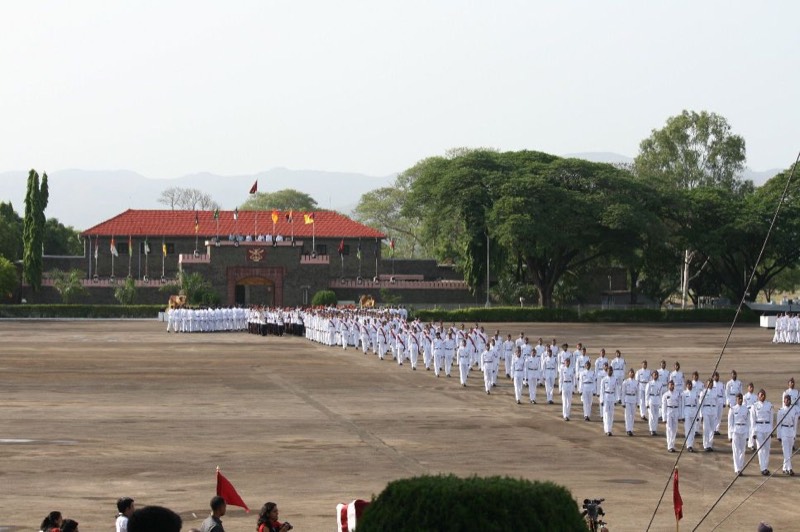
- Photo credits: Hero — NDA Passing Out Parade, Srijithpv / Wikimedia Commons, CC BY 3.0. Campus — SUDAN Block, NDA Khadakwasla, Sourabh.scd / Wikimedia Commons, CC BY-SA 4.0.
This guide is a structured summary of publicly available official medical standards from the documents listed above. The decision of the Special Medical Board is final. Borderline cases must be assessed by Armed Forces medical specialists. Numbers (refractive limits, recovery periods, BP thresholds) may be revised in future notifications — always cross-check against the current cycle's notification before finalising any decision.