Quick Summary
- Medical standard: DGMS Army Aug 2019 graduate-entry column — identical to IMA
- Vision: Uncorrected 6/60; myopia max −3.5 D; BCVA 6/6; CP-II; LASIK permitted
- Height: 157 cm minimum (male); 77 cm chest with 5 cm expansion
- Commission: Short Service Commission — 10 years, extendable to 14; PC conversion possible
- Vacancies (CDS I 2025): 275 posts — largest allocation in CDS
- Age: 19–25 years (born 02 Jan 2001 – 01 Jan 2007); unmarried male graduates only
1. OTA SSC — Overview
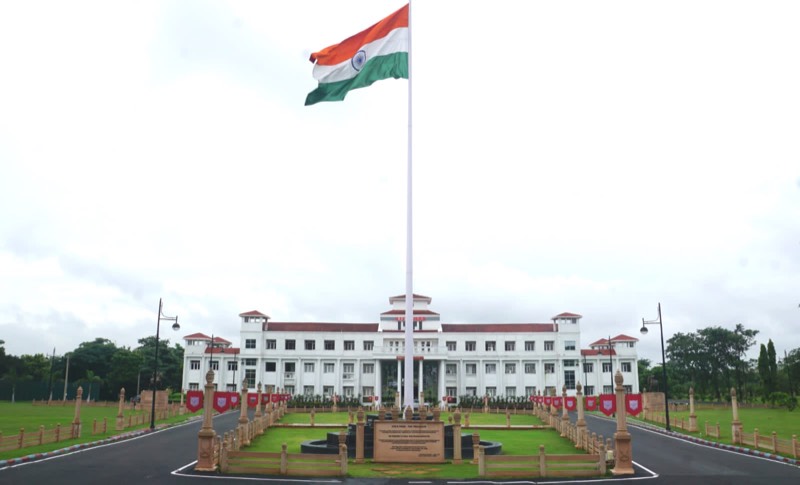
OTA (Officers Training Academy) Chennai offers Short Service Commission (SSC) in the Indian Army. This is the entry route for male graduates aged 19–25 who have cleared the CDS written examination and SSB interview. For CDS I 2025, the eligibility window is birth between 02 January 2001 and 01 January 2007.
The medical standard applied at OTA is drawn from the same DGMS Army Aug 2019 circular used for IMA and all other graduate-entry Army routes. There is no separate, relaxed, or modified medical policy for OTA.
Key Facts at a Glance
| Parameter | Detail |
|---|---|
| Full name | Officers Training Academy, Chennai |
| Medical basis | DGMS Army Aug 2019 — graduate-entry column |
| Vacancies (CDS I 2025) | 275 posts |
| Commission type | Short Service Commission (SSC) |
| Age (CDS I 2025) | 19–25 years (born 02 Jan 2001 – 01 Jan 2007) |
| Educational qualification | Any degree from a recognised university |
| Marital status | Unmarried male |
| Training duration | ~49 weeks (approx. 1 year) |
2. IMA vs OTA: Same Medical Standards
This is one of the most frequently asked questions from CDS aspirants: "Are OTA medical standards easier than IMA?" The answer is an unambiguous no.
| Parameter | IMA (Permanent Commission) | OTA Men (Short Service Commission) |
|---|---|---|
| Medical standard | DGMS Army Aug 2019 — Graduate entries | DGMS Army Aug 2019 — Graduate entries |
| Uncorrected vision | 6/60 both eyes | 6/60 both eyes |
| Max myopia | −3.5 D Sph (±2.0 D Cyl) | −3.5 D Sph (±2.0 D Cyl) |
| LASIK | Permitted (8 conditions) | Permitted (8 conditions) |
| Colour perception | CP-II | CP-II |
| Minimum height | 157 cm | 157 cm |
| Minimum chest | 77 cm + 5 cm expansion | 77 cm + 5 cm expansion |
| Dental | 14 points minimum | 14 points minimum |
| Commission type | Permanent Commission | Short Service (14 yrs) |
| Age (CDS I 2025) | 19–24 (born 02 Jan 02 – 01 Jan 07) | 19–25 (born 02 Jan 01 – 01 Jan 07) |
| Vacancies (CDS I 2025) | 100 | 275 |
The only practical differences are the age ceiling (OTA extends one year beyond IMA) and the nature of commission granted on completion of training. Every medical criterion is shared.
3. Examination Procedure
OTA candidates go through the same three-tier AFMS medical examination process as IMA candidates. The medical board is convened after SSB recommendation, not before.
-
SMB — Special Medical Board
Conducted after SSB recommendation. Candidate reports to the designated AFMS hospital with AFMSF-2 form and original documents. Duration: 1–2 days. All mandatory investigations are done here.
-
AMB — Appeal Medical Board
If declared unfit at SMB, the candidate may appeal within approximately 42 days (check the SMB letter for exact deadline). This is a one-time right. The AMB re-examines the candidate; its decision is generally final.
-
RMB — Review Medical Board
Not a matter of right. Ordered solely at the discretion of DGMS (Army) in special cases. Candidates cannot apply for this directly; it is typically ordered when the SMB and AMB disagree on a temporary condition, or when an administrative review reveals an anomaly.
Mandatory Investigations at the SMB
These tests are conducted at every AFMS SMB. Carry originals and photocopies of any prior reports if you have them.
- Complete Haemogram (CBC with differential)
- Urine Routine Examination / Microscopy (RE/ME)
- X-ray Chest — PA view
- X-ray Lumbosacral Spine — AP & Lateral views
- Ultrasound Abdomen & Pelvis
- 12-lead ECG (resting)
- Liver Function Tests (LFT)
- Renal Function Tests (RFT) including serum creatinine
- Fasting blood glucose and 2-hour post 75 g glucose (OGTT)
- Fasting lipid profile
- Hb Electrophoresis (haemoglobinopathy screening)
4. Vision Standards
OTA uses the graduate-entry vision standard from DGMS Army Aug 2019, which is more permissive than the NDA Army standard because adult eyes are physiologically stable and LASIK is feasible.
| Parameter | OTA Standard |
|---|---|
| Uncorrected distance vision | 6/60 each eye (Right & Left) |
| Best corrected visual acuity (BCVA) | 6/6 each eye |
| Myopia (maximum) | −3.50 D Sph (±2.0 D Cyl) |
| Hypermetropia (maximum) | +3.50 D Sph (±2.0 D Cyl) |
| Colour perception | CP-II (Ishihara + Farnsworth) |
| LASIK / PRK | Permitted — 8 conditions must be met |
| Radial Keratotomy (RK) | Permanently unfit |
LASIK — 8 Mandatory Conditions
LASIK is permitted for OTA entry, but all eight of the following conditions must be satisfied simultaneously. Non-compliance with even one condition is a bar:
- Age at surgery: Candidate must have been above 20 years at the time of LASIK surgery
- Post-op interval: Minimum 12 months must have elapsed since the procedure
- Central corneal thickness (CCT): ≥ 450 µm post-operatively
- Axial length: ≤ 26 mm (indicates the eye is not pathologically elongated)
- Residual refraction: ≤ ±1.0 D in any meridian
- Retinal status: Normal retina — no lattice degeneration, holes, tears, or detachment
- Corneal topography: Normal (no forme fruste keratoconus or irregular astigmatism)
- Documentary evidence: Certificate from the operating centre confirming the above parameters is mandatory at SMB
5. Height & Weight
Anthropometric standards for OTA are identical to IMA. The DGMS Army Aug 2019 chart applies uniformly across Army graduate entries.
| Region / Category | Minimum Height (cm) |
|---|---|
| General (all regions) | 157 cm |
| Ladakh, Andaman & Nicobar Islands | 155 cm |
| Gorkha, North-East states, Uttarakhand | 152 cm |
Chest: Minimum 77 cm with a mandatory expansion of at least 5 cm on full inspiration.
Weight Range (Age 20–30, Male)
The table below shows the DGMS acceptable weight range for the age band most relevant to CDS candidates. Weight outside this band results in temporary rejection with a period to achieve the required weight.
| Height (cm) | Minimum Weight (kg) | Maximum Weight (kg) |
|---|---|---|
| 157 | 44.4 | 56.7 |
| 160 | 46.1 | 58.9 |
| 165 | 49.0 | 62.6 |
| 170 | 52.0 | 66.5 |
| 175 | 55.1 | 70.4 |
| 180 | 58.3 | 74.5 |
| 185 | 61.6 | 78.7 |
| 190 | 65.0 | 83.0 |
| 195 | 68.4 | 87.5 |
6. Cardiovascular
Cardiac examination at the OTA SMB is thorough. Both clinical findings and investigative results (ECG) are evaluated.
- Blood pressure: Persistent BP > 140/90 mmHg leads to rejection. A 24-hour Ambulatory Blood Pressure Monitoring (ABPM) study is done to differentiate white-coat hypertension from persistent hypertension. A single elevated reading at the SMB is not automatically a rejection — it may trigger the ABPM.
- Abnormal ECG: Any abnormal ECG finding triggers temporary rejection. Benign findings (e.g., incomplete RBBB, sinus bradycardia in a fit athlete) can be cleared by a cardiologist's review before or at the AMB. Significant findings (LVH, ST changes, conduction blocks) are disqualifying.
- Cardiac surgery: Any history of cardiac surgery → permanently unfit, regardless of outcome or current fitness.
- Congenital cardiac anomalies: Any significant congenital anomaly → unfit.
- Diastolic murmurs: Any diastolic murmur → unfit. Systolic flow murmurs may be acceptable on specialist clearance.
- Arrhythmias: Persistent arrhythmias other than sinus arrhythmia → unfit.
7. Musculoskeletal Key Points
Musculoskeletal (MSK) conditions are among the most common causes of medical rejection at Army SMBs. The following are the most clinically significant disqualifiers for OTA candidates.
Lower Limb Alignment
- Knock knees (Genu Valgum): Intermalleolar distance > 5 cm in males → unfit. Measured standing upright with knees touching.
- Bow legs (Genu Varum): Intercondylar distance > 7 cm → unfit. Measured standing upright with ankles touching.
- Flat feet: Rigid or gross flat feet → unfit. Supple flat feet where the arch reappears on toe-standing, the candidate can skip and run without pain, and the foot is painless and mobile → may be declared fit.
Knee Joint
- ACL (Anterior Cruciate Ligament) reconstruction — surgical or graft → permanently unfit
- All intra-articular fractures of major joints (knee, hip, ankle, shoulder) → unfit
- Meniscal surgery (partial or total meniscectomy) → unfit
- Significant ligamentous instability without surgery → assessed case-by-case
Spine
- Scoliosis: Lumbar curve > 15° → unfit; Thoracic curve > 20° → unfit; Mild curves below these thresholds may be fit with normal function and no symptoms
- Spondylolysis: Stress fracture of the pars interarticularis → unfit
- Spondylolisthesis: Any grade → unfit (detected on lumbosacral X-ray, which is mandatory)
- IVDP (Intervertebral Disc Prolapse): Symptomatic or with neurological deficit → unfit
- Minor degenerative changes without symptoms in a young candidate → assessed on merit
Upper Limb & Other
- Any limitation of range of motion of a major joint → assessed case-by-case; functional impairment → unfit
- Malunited fractures affecting joint mechanics → unfit
- Amputation of any digit → unfit
8. ENT, Dental & Skin
ENT (Ear, Nose & Throat)
| Condition | Verdict |
|---|---|
| Hearing — whisper test at 610 cm | Must pass both ears |
| Active Otitis Media (CSOM) | Unfit |
| Tympanoplasty / Myringoplasty (for COM) | Permanently unfit |
| Intact tympanic membrane (any ear) | Required — perforations → unfit |
| Significant deviated nasal septum (DNS) causing obstruction | Unfit — corrected DNS may be fit |
| Nasal polyposis | Unfit |
| Allergic rhinitis (perennial, with symptoms) | Unfit |
| Wax in ears | Temporary rejection — removable by ENT |
| Tonsillitis (recurrent / hypertrophied) | May require tonsillectomy; assess after healing |
Dental
| Parameter | Standard |
|---|---|
| Minimum dental fitness score | 14 points (out of 22 permanent teeth, each tooth scores points) |
| Loose teeth | > 2 loose teeth → unfit |
| Fixed orthodontic appliances (braces) | Unfit while appliances are in place |
| Dental implants | > 2 implants → unfit |
| Untreated cavities / periapical abscess | Temporary — treatable before/at AMB |
| Gum disease (periodontitis) | Significant gum disease → unfit; treated, stable gum disease → may be fit |
Skin & Tattoos
| Condition | Verdict |
|---|---|
| Tattoo — inner forearm (elbow to wrist) | Permitted |
| Tattoo — dorsal of hand | Permitted |
| Tattoo — anywhere else (upper arm, neck, chest, back, legs, face) | Bar to selection |
| Keloid (hypertrophic scar tendency) | Unfit |
| Psoriasis | Unfit |
| Significant palmoplantar hyperhidrosis | Unfit |
| Vitiligo / Leucoderma | Assessed — extensive or rapidly progressing → unfit |
9. Short Service Commission — What It Means
SSC Service Structure
- Initial grant: 10 years Short Service Commission
- Extension: Extendable by 4 additional years = 14 years total SSC tenure
- Conversion to PC: On merit, through a PC selection board, typically after 5–7 years of service. This is a competitive process but a well-established pathway — many OTA-entry officers have risen to Lieutenant Colonel, Colonel, and beyond through PC conversion.
- If no PC: Officer leaves with terminal benefits, pension entitlements (after 20 years of qualifying service under the NPS framework), and a strong civilian career profile from Army service.
- Rank progression: Same as PC — Lieutenant on commissioning, Captain after 2 years, Major after approximately 6 years.
OTA Training
- Duration: ~49 weeks (approximately 1 year)
- Location: Officers Training Academy, Chennai (Tambaram)
- Note: OTA's training is shorter than IMA's 18-month course; the condensed curriculum is designed for graduate-entry candidates who have completed a full degree.
10. Marriage Restrictions
The CDS I 2025 Notification (paras 11–12, pages 16–17) explicitly prohibits marriage before the completion of full OTA training. This rule applies to all CDS academies, including IMA and INA.
| Scenario | Consequence |
|---|---|
| Married before application or before joining OTA | Not selected for training |
| Marries after application but before joining | Not selected for training |
| Marries during training at OTA | Discharged immediately + liable to refund all government expenditure incurred |
| Marriage after commissioning (after completing OTA training) | Permitted — subject to CO approval and unit norms |
11. Defects to Rectify
The following conditions either directly disqualify or increase your rejection risk — and can be corrected before your SMB with proper planning. The DGMS rectification framework (referenced in practice guidelines, not explicitly listed in the CDS notification) follows standard clinical timelines.
-
Wax in EarsSimple ENT cleaning by a specialist. Do this 1–2 weeks before SMB. Wax impaction causes temporary hearing reduction and automatic rejection.
-
Deviated Nasal Septum (DNS)If causing significant obstruction — septoplasty. Recovery 4–6 weeks. Corrected DNS with no residual obstruction is typically fit. Get a post-op ENT certificate.
-
Hydrocele / PhimosisSurgical correction. Hydrocelectomy: 3–4 weeks recovery. Circumcision / preputioplasty for phimosis: 2–4 weeks recovery. Carry discharge summary.
-
Overweight / UnderweightBring weight within the DGMS age-height chart above. Begin 3–6 months before SMB. Rapid extreme weight loss (crash dieting) can affect haemogram and metabolic tests — avoid.
-
Under-sized ChestPhysical conditioning focused on breathing capacity and chest musculature. Swimming, rowing, and push-ups over 3–4 months can add 2–3 cm expansion. Minimum required: 77 cm with 5 cm expansion.
-
Piles (Haemorrhoids)Grade III/IV haemorrhoids → surgical treatment (haemorrhoidectomy or banding). Recovery 4–8 weeks. Grade I/II may be temporarily fit; grade III/IV will likely reject you.
-
GynaecomastiaSurgical excision (sub-areolar mastectomy) if persistent and significant. Recovery: 10–12 weeks. Plan at least 4 months before SMB to allow complete healing and a fitness certificate.
-
Recurrent / Hypertrophic TonsillitisTonsillectomy if indicated by an ENT specialist. Recovery: 2–3 weeks. Avoid surgery within 8 weeks of SMB — unhealed surgical sites are rejected.
-
VaricoceleSub-inguinal varicocoelectomy (preferred by AFMS). Recovery: 6–8 weeks. Carry histopathology and discharge summary. Clinical-grade varicocele (Grade II/III) detected at USG abdomen is a rejection criterion.
-
Dental Fitness (< 14 Points)Fill cavities, extract non-restorable teeth, treat gum disease, complete all pending restorations. Visit a dentist at least 3–4 months before SMB. Remove fixed orthodontic appliances at least 2 months before SMB.
-
Vision Correction (LASIK)If your uncorrected vision is poor but refractive error is within the ±3.5 D limit, LASIK can be considered. Plan 18+ months ahead: surgery at age 20+, 12-month post-op wait before SMB, all 8 LASIK conditions documented, certificate from operating centre mandatory.
12. Frequently Asked Questions
Are OTA medical standards easier than IMA?
No. OTA and IMA use exactly the same DGMS Army Aug 2019 graduate-entry medical standards. Vision limits, height, weight, cardiac criteria, MSK conditions, dental requirements, and all other parameters are identical. A candidate who passes the IMA medical board would also pass the OTA board, and vice versa. The only difference is the age range (OTA allows up to 25, IMA up to 24) and commission type (SSC vs PC).
What is the age limit for OTA via CDS?
For OTA SSC Men via CDS I 2025: born between 02 January 2001 and 01 January 2007 (age 19–25 years). This is one year broader than IMA (which goes up to 24). Candidates must be unmarried males. Educational requirement: any degree from a recognised university.
Can I join OTA if I have −3.2 D myopia?
Yes. OTA uses the graduate-entry vision standard of −3.5 D maximum myopia. A myopia of −3.2 D is within this limit. However, you must be able to correct to 6/6 in both eyes with glasses, and your colour perception must be CP-II. Note that this would fail you for INA (−1.0 D limit) or AFA Flying (NIL myopia).
I had an appendix operation 2 months ago. Can I appear for OTA medical?
It depends on the type of surgery:
- Laparoscopic appendectomy: Minimum 4 weeks post-op — you are eligible after 4 weeks (normal histopathology and USG needed).
- Open appendectomy (muscle-split): Minimum 12 weeks — you need 3 months post-surgery.
- Open appendectomy (muscle-cut): Minimum 6 months — you need 6 months post-surgery.
Carry your discharge summary, histopathology report, and a current fitness certificate from your surgeon.
What is the OTA vacancies count in CDS?
For CDS I 2025, OTA Men (SSC) had 275 vacancies — the largest of any CDS academy. IMA had 100, INA 32, AFA 32, and OTA Women 18, totalling 457. OTA's high vacancies make it the most accessible route for Army SSC candidates who may not rank high enough for IMA.
Can I convert from SSC (OTA) to Permanent Commission in the Army?
Yes, SSC officers can be considered for Permanent Commission (PC) through a PC selection board after 5–7 years of service. Selection is merit-based and limited in numbers, but it is a well-established pathway. Officers who are not selected for PC complete their 14-year SSC (10 + 4 years) and leave with terminal benefits. Many OTA-entry officers have risen to senior ranks through the PC conversion route.
I have a tattoo on my upper arm from college. Does it disqualify me from OTA?
Yes. A tattoo on the upper arm is outside the permitted locations (inner forearm and dorsal of hand). The CDS notification does not include an explicit tattoo policy section, but service-practice rules that align with the NDA Appendix IV apply at OTA SMBs. Tattoos elsewhere on the body are a bar to selection. You would need medically-supervised laser removal well before your SSB, with documentation.
Does the OTA medical board examine blood for thalassaemia?
Yes. Hb electrophoresis is a mandatory test at every AFMS Special Medical Board, including OTA. It is specifically done to detect haemoglobinopathies including sickle cell disease, sickle cell trait, Beta Thalassaemia Major/Intermedia/Minor/Trait, and Alpha Thalassaemia — all of which are disqualifying. There is no preparation that can affect this test result.