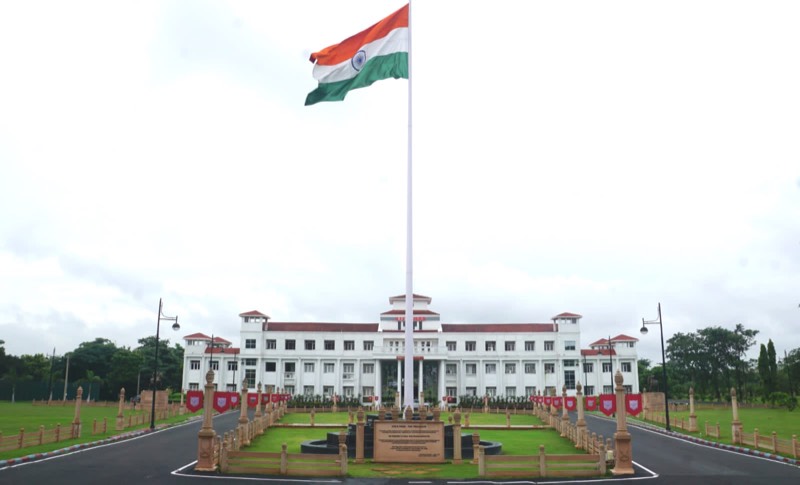
1. IMA — Who Is This For?
IMA (Indian Military Academy) Dehradun is the gateway to a Permanent Commission in the Indian Army through the CDS examination. Male graduates aged 19–24 (born 02 Jan 2002 – 01 Jan 2007 for CDS I 2025) who are unmarried can apply. The degree must be from a recognised university — branch or stream does not matter for IMA.
Medical standards for IMA come from the DGMS Army circular of August 2019, specifically the "Graduate & equivalent entries" column. The same standards apply to UES, TGC, NCC Special Entry, and CDS OTA Men. These are deliberately more relaxed than the NDA 10+2 entry because graduate candidates are older and their physiology (especially eyes) is more stable.
At a Glance — IMA Eligibility
| Parameter | Requirement |
|---|---|
| Examination | CDS (UPSC) |
| Academy | Indian Military Academy, Dehradun |
| Commission type | Permanent Commission, Indian Army |
| Gender | Male only |
| Marital status | Unmarried (divorcees/widowers NOT eligible) |
| Age (CDS I 2025) | 19–24 yrs · Born 02 Jan 2002 – 01 Jan 2007 |
| Education | Any degree from a recognised university |
| Medical standard | DGMS Army Aug 2019 — Graduate entry column |
| Vacancies (CDS I 2025) | 100 |
2. Examination Procedure (SMB → AMB → RMB)
All CDS IMA candidates who receive an SSB recommendation undergo a three-tier medical examination process. Understanding the stages helps you plan remedial action if you receive a temporary rejection.
-
SMB — Special Medical BoardConducted at an AFMS (Armed Forces Medical Services) hospital near your SSB centre, after the SSB recommends you. Form AFMSF-2 is used. Duration is typically 1–2 days. All mandatory investigations are done here (see list below). The SMB result is: Fit, Temporarily Unfit (TU), or Permanently Unfit (PU).
-
AMB — Appeal Medical BoardHeld at a Command Hospital, available within approximately 42 days of the SMB rejection date. You get one opportunity to appeal. The AMB can upgrade a TU/PU to Fit or confirm the rejection. Candidates who receive a TU can use this time to address the defect.
-
RMB — Review Medical BoardNot a right of the candidate — it is discretionary and convened only on the order of the DGMS (Director General, Medical Services). The RMB reviews borderline permanent rejections when new evidence is submitted. Most candidates will not reach this stage.
Mandatory Investigations at SMB
The following tests are conducted at every IMA SMB — get medically assessed for these before the board date to know your baseline:
- Complete haemogram — Hb, TLC with DLC, platelets, ESR
- Urine routine examination / microscopic examination (RE/ME)
- X-ray Chest PA view
- X-ray Lumbosacral Spine AP & lateral
- USG Abdomen & pelvis
- ECG (12-lead resting)
- Liver function tests (LFT) & renal function tests (RFT)
- Fasting blood glucose and 2-hour post 75 g glucose blood sugar
- Lipid profile (total cholesterol, LDL, HDL, TG)
- Hb electrophoresis — mandatory to exclude haemoglobinopathies (thalassaemia, sickle cell)
3. Vision Standards (IMA)
| Parameter | IMA Standard (Graduate Entry) |
|---|---|
| Uncorrected vision (unaided) | 6/60 each eye |
| Best Corrected Visual Acuity (BCVA) | 6/6 each eye |
| Myopia (max) | −3.50 D Sph (± 2.00 D Cyl) |
| Hypermetropia (max) | +3.50 D Sph (± 2.00 D Cyl) |
| Colour perception | CP-II (Ishihara plates) |
| LASIK / PRK | Permitted — subject to 8 conditions |
| Radial Keratotomy (RK) | Permanently unfit |
| Squint (strabismus) | Unfit |
NDA Army vs IMA — Vision Comparison
| Parameter | NDA Army (10+2 entry) | IMA via CDS (Graduate entry) |
|---|---|---|
| Uncorrected vision | 6/36 & 6/36 | 6/60 & 6/60 |
| Myopia (max) | −2.50 D | −3.50 D |
| Hypermetropia (max) | +3.50 D | +3.50 D |
| LASIK permitted? | No | Yes |
LASIK — 8 Mandatory Conditions
LASIK is permitted for IMA under the DGMS Aug 2019 circular, but only when all eight of the following conditions are satisfied simultaneously. Failure on any one condition leads to rejection:
- Candidate's age at the time of LASIK surgery must be more than 20 years
- Minimum 12 months must have elapsed post-LASIK, with an uncomplicated surgical & healing course
- Central corneal thickness (CCT) must be ≥ 450 microns post-surgery
- Axial length must be ≤ 26 mm (measured by IOL Master or equivalent biometry)
- Residual refraction post-LASIK must be ≤ ±1.00 D Cyl
- Retina must be normal and healthy — no peripheral degeneration, retinal breaks, or lattice changes
- Corneal topography and all ectasia markers must be within normal limits
- A certificate from the operating medical centre specifying the date and type of surgery is mandatory at the time of SMB
4. Height & Weight
Height Standards
- Minimum height (male, general): 157 cm
- 155 cm — Ladakh tribal districts, Andaman & Nicobar Islands
- 152 cm — Gorkha, North-Eastern states (Assam, Manipur, Meghalaya, Mizoram, Nagaland, Sikkim, Tripura, Arunachal Pradesh), Uttarakhand hill districts
- Chest: Minimum 77 cm; expansion of minimum 5 cm required
Weight-for-Height Chart (Male, age band 20–30)
Candidates must fall within the acceptable weight range at the time of the SMB. Both underweight and overweight are grounds for temporary rejection.
| Height (cm) | Min Weight (kg) | Max Weight (kg) |
|---|---|---|
| 157 | 44.4 | 56.7 |
| 160 | 46.1 | 58.9 |
| 165 | 49.0 | 62.6 |
| 170 | 52.0 | 66.5 |
| 175 | 55.1 | 70.4 |
| 180 | 58.3 | 74.5 |
| 185 | 61.6 | 78.7 |
| 190 | 65.0 | 83.0 |
| 195 | 68.4 | 87.5 |
Table shows age band 20–30 years. Slightly different limits apply outside this age range. Source: DGMS Army Aug 2019.
5. Cardiovascular
The cardiovascular assessment at the SMB includes clinical examination, resting BP measurement (repeated sittings if needed), and a 12-lead ECG. An echocardiogram and stress test (treadmill/ETT) are ordered for any abnormal ECG finding or borderline BP.
Blood Pressure
- BP persistently > 140/90 mmHg on repeated readings → Unfit
- 24-hour ambulatory blood pressure monitoring (ABPM) is used where white-coat hypertension is suspected; normal ABPM with no evidence of end-organ damage may allow clearance
- BP < 90/60 mmHg (symptomatic) → Unfit
Pulse Rate
- Resting pulse > 100 bpm (tachycardia) → Unfit unless a cardiologist confirms physiological cause
- Resting pulse < 60 bpm (bradycardia) → Unfit unless confirmed physiological (e.g., trained athlete, Holter normal)
ECG & Structural Conditions
- Any ECG abnormality → temporary rejection; 2D echo + stress test required; benign findings (e.g., isolated RBBB, early repolarisation) may be cleared post-evaluation
- History of any cardiac surgery or catheter-based intervention → Permanently Unfit
- Any congenital cardiac anomaly → Permanently Unfit
- Diastolic murmur — always organic in nature → Permanently Unfit
- Innocent systolic murmur with normal echo → may be cleared
6. Respiratory
Chest X-ray (PA view) is mandatory at every SMB. Pulmonary function tests (spirometry) are ordered if the X-ray or clinical examination raises concerns.
- Bronchial asthma (any history) — Unfit. This includes reactive airway disease, exercise-induced bronchospasm, and allergic asthma. Current remission does not help.
- Pulmonary tuberculosis — Unfit. Exception: may be considered by AMB/RMB if more than 2 years post-completion-of-treatment and chest X-ray shows no significant residual changes.
- Pleural thickening or effusion (residual) — Unfit.
- Chronic bronchitis — Unfit.
- Any X-ray evidence of active or residual pulmonary disease — Unfit.
- Pneumothorax (spontaneous) history — Unfit (risk of recurrence at altitude/under physical stress).
- Haemoptysis (any cause) — Unfit until investigated and cleared.
7. Musculoskeletal
The MSK examination is detailed and covers limb alignment, joint stability, spine curvature, and foot architecture. Clinical measurements are taken for all linear parameters.
- Knock knees (genu valgum): Intermalleolar distance > 5 cm in males → Unfit
- Bow legs (genu varum): Intercondylar distance > 7 cm → Unfit
- Genu recurvatum > 10° → Unfit
- Flat feet (pes planus) — rigid/gross: Unfit. Flexible flat feet (arches reappear on toe-standing, supple, painless, candidate can run/skip) → may be Fit
- Club foot (talipes equinovarus) — Permanently Unfit
- ACL reconstruction (any knee) — Permanently Unfit (not overturnable at AMB/RMB)
- All intra-articular fractures of major joints — Unfit
- Scoliosis: Lumbar > 15°, Thoracic > 20° → Unfit. ≤ 10° (lumbar) / ≤ 15° (thoracic) may be acceptable with specific conditions; X-ray & clinical assessment made
- Spondylolysis / spondylolisthesis — Unfit (X-ray lumbosacral spine is mandatory)
- Hallux valgus > 20° → Unfit
- Cubitus valgus/varus > 5° → Unfit
- Hyperextensible finger joints (> 90° at MCP/PIP) → Unfit
- Recurrent shoulder dislocation — Unfit
- Significant limb length discrepancy (> 2 cm) — Unfit
- Amputated digit/limb — Unfit
8. ENT (Ear, Nose & Throat)
The ENT examination covers external and middle ear status, nasal airway, and the nasopharynx. Pure tone audiometry is done if clinical assessment raises a hearing concern.
Ear / Hearing
- Hearing: Unable to hear a whisper at 610 cm (6 metres) with either ear → Unfit. PTA (pure tone audiogram) loss > 20 dB in speech frequencies → Unfit
- Active Otitis Media (chronic suppurative or acute) — Unfit
- Tympanoplasty or Myringoplasty performed for chronic otitis media — Permanently Unfit
- Vestibular dysfunction or positional vertigo — Unfit
- Tinnitus (persistent) — Unfit
Nose / Sinuses
- Deviated Nasal Septum (DNS) — significant: Unfit. Septoplasty with adequate resultant airway → may be Fit post-op
- Nasal polyposis — Unfit
- Allergic rhinitis — Unfit
- Chronic sinusitis — Unfit
Throat
- Active tonsillitis requiring tonsillectomy — Unfit until at least 2 weeks post-tonsillectomy
- Laryngeal pathology affecting voice — Unfit
9. Dental
A minimum of 14 dental points must be present for a candidate to be declared fit. Dental points are scored using a functional points system:
| Tooth Type | Points per Tooth |
|---|---|
| Incisor, canine, premolar, underdeveloped 3rd molar | 1 point each |
| 1st molar, 2nd molar, fully developed 3rd molar | 2 points each |
For satisfactory dental function, the candidate must have:
- Any 4 of 6 anterior teeth (incisors + canines) functioning in each jaw
- Any 6 of 10 posterior teeth (premolars + molars) functioning in each jaw
Dental Disqualifiers
- More than 2 loose teeth (Grade II or higher mobility)
- Severe pyorrhoea (periodontitis with pocketing > 5 mm)
- Severe malocclusion (Class III or severe Class II, div 2)
- Mouth opening < 30 mm (trismus)
- Temporomandibular joint (TMJ) pathology
- Fixed or removable orthodontic appliances in situ (lingual retainers are acceptable)
- More than 2 dental implants
- Missing teeth reducing total dental points below 14
10. Skin & Tattoo
Tattoo Policy (IMA / CDS Army)
The UPSC CDS notification does not include a detailed tattoo section, but the Indian Army service-practice rule (established in DGMS circulars) governs SMB assessments:
| Location | Status |
|---|---|
| Inner face of forearm (elbow to wrist) | Permitted |
| Dorsal (back) side of hand | Permitted |
| Upper arm, shoulder, chest, back | Barred from selection |
| Neck, face, lower leg, ankle | Barred from selection |
| Tribal tattoos (traditional, non-offensive) | Case-by-case — Commandant, Selection Centre |
Skin Disqualifiers
- Vitiligo: Extensive patches on exposed parts → Unfit. Small, stable, non-expanding patches in unexposed areas → may be Fit on case-by-case basis
- Psoriasis — Unfit (systemic association, unpredictable relapse)
- Keloid (any size, any site) — Unfit
- Acne vulgaris: Moderate to severe (Grade II–IV) → Unfit. Grade I (comedones, face only) → acceptable
- Significant palmoplantar hyperhidrosis — Unfit (impairs grip, equipment handling)
- Chronic eczema or dermatitis — Unfit
11. CNS & Psychiatry
- Epilepsy: Any history of fits after age 5 years → Permanently Unfit. Febrile convulsions only before age 5 → may be acceptable with documentation
- Mental illness of any kind — including depression, anxiety disorder, OCD, schizophrenia, bipolar disorder → Permanently Unfit
- Migraine: Severe enough to require medical consultation or medication → Unfit. Occasional mild headaches without focal neurology → acceptable
- Drug dependence (any substance, including cannabis, alcohol dependence) → Unfit
- Severe head injury with loss of consciousness > 5 minutes, or with documented neurological deficit → Unfit
- Peripheral neuropathy of any cause → Unfit
- Cerebrovascular disease (TIA, stroke) → Permanently Unfit
- Parkinson's disease, multiple sclerosis, MND → Permanently Unfit
Emotional Markers — Flagged at SMB
The following behaviours, while not independently disqualifying, are noted as "emotional instability markers" and may prompt a psychiatric referral:
- Stammering or dysfluent speech
- Visible tics or repetitive movements
- Nail-biting (severe, with tissue damage)
- Excessive sweating unrelated to heat or exertion (palmar, plantar, or generalised)
12. Haematology
Hb electrophoresis is mandatory at every SMB — thalassaemia trait is detected here even in candidates who feel perfectly healthy. Do not attempt to hide haemoglobin variant status.
- Sickle cell disease or sickle cell trait (HbAS) — Unfit
- Beta Thalassaemia Major or Intermedia — Unfit
- Beta Thalassaemia Trait (Minor) — Unfit (explicitly listed in DGMS circular)
- Alpha Thalassaemia (any form) — Unfit
- Macrocytic / megaloblastic anaemia — Unfit
- Haemophilia A or B — Permanently Unfit
- von Willebrand's disease — Unfit
- Polycythaemia (Hb > 16.5 g/dL) — Unfit
- Mild iron deficiency anaemia (Hb between 11–13 g/dL) — Temporarily Unfit (4–6 weeks iron supplementation and recheck)
- Thrombocytopenia (< 1.5 lakh) — Temporarily or Permanently Unfit depending on cause
13. Gastrointestinal & Genitourinary
USG abdomen and pelvis is mandatory at every SMB. Many conditions that would otherwise be missed are picked up here — renal cysts, calculi, organomegaly, and abdominal wall pathology.
| Condition / Surgery | Status / Recovery Timeline |
|---|---|
| Abdominal hernia (any type, unrepaired) | Unfit |
| Inguinal/umbilical hernioplasty (open, anterior) | Fit 24 weeks post-op (6 months) |
| Laparoscopic hernia repair | Fit 6 months post-op |
| Open cholecystectomy | Fit 24 weeks post-op |
| Laparoscopic cholecystectomy | Fit 8 weeks post-op |
| Laparoscopic appendectomy | Fit 4 weeks post-op |
| Open appendectomy (grid-iron / muscle-split incision) | Fit 12 weeks post-op |
| Open appendectomy (paramedian / cut incision) | Fit 6 months post-op |
| Haemorrhoids — any degree (unoperated) | Unfit |
| Haemorrhoidectomy / banding | Fit 12 weeks post-op |
| Anal fistula (fistula-in-ano) | Unfit (complex anatomy, tendency to recur) |
| Renal calculi — any history or radiological finding | Unfit |
| Simple renal cyst > 1.5 cm | Unfit |
| Hydrocele (unrepaired) | Unfit |
| Hydrocelectomy | Fit 4–8 weeks post-op |
| Varicocele (unrepaired) | Unfit |
| Sub-inguinal varicocoelectomy | Fit 8 weeks post-op |
| Phimosis (unrepaired) | Unfit |
| Circumcision for phimosis | Fit 4–6 weeks post-op |
14. Defects to Rectify (Pre-Board Checklist)
15. Frequently Asked Questions
What medical standards apply to IMA candidates via CDS?
IMA uses DGMS Army Aug 2019 graduate-entry standards — the same document used for CDS, UES, TGC, and NCC entries. These are more relaxed than NDA Army (10+2 entry) on vision: uncorrected vision can be 6/60 (vs NDA's 6/36), myopia up to −3.5 D (vs NDA's −2.5 D), and LASIK is permitted (not allowed for NDA Army). All other systems — cardiac, ENT, MSK, dental, haematology — are identical across both entries.
I failed the NDA medical due to myopia −3.0 D. Can I still join IMA via CDS?
Yes. NDA Army allows myopia only up to −2.5 D. IMA (graduate entry via CDS) allows up to −3.5 D. A myopia of −3.0 D would disqualify you from NDA Army but is within the IMA/CDS limit. You still need BCVA correctable to 6/6 in each eye and CP-II colour perception. Astigmatism must also be ≤ ±2.0 D Cyl.
What is the age limit for IMA via CDS?
For IMA via CDS I 2025: born between 02 January 2002 and 01 January 2007 (age 19–24 years). Candidates must be unmarried males. Male divorcees and widowers are NOT treated as unmarried (CDS Notification Note, page 8). Educational requirement: any degree from a recognised university — branch or discipline does not matter for IMA.
Can I join IMA if I had knee surgery (ACL reconstruction)?
No. ACL reconstruction is a permanent disqualifier for all CDS entries, including IMA. The DGMS Army guidelines explicitly list ACL-reconstructed candidates as permanently unfit. This is not a temporary condition and cannot be overturned at the AMB or the RMB. This applies to reconstruction on either knee, regardless of rehabilitation outcome or return-to-sport status.
Is asthma disqualifying for IMA?
Yes. Any history of bronchial asthma is disqualifying, regardless of severity or current control. This applies even if you had mild childhood asthma. The medical board reviews medical records, not just current symptoms — be honest in your AFMSF-2 declaration. Reactive airway disease, exercise-induced bronchospasm, and allergic asthma are all included under this disqualifier.
I have beta thalassaemia trait (minor). Can I join IMA?
No. Beta Thalassaemia Trait is explicitly listed as unfit for all armed forces entries including IMA via CDS. Hb electrophoresis is a mandatory test at every SMB and will detect thalassaemia trait even in completely healthy-looking candidates with normal Hb levels. Sickle cell trait is equally disqualifying. This rule is based on the risk under high-altitude and hypoxic combat conditions.
What happens if I have a tattoo on my upper arm for IMA?
A tattoo on the upper arm is not permitted. Only tattoos on the inner face of the forearm (inside of elbow to wrist) or the dorsal (back) of the hand are allowed. Any tattoo elsewhere — including upper arm, chest, back, neck, or lower leg — bars you from selection. Tribal tattoos are considered case-by-case by the Commandant of the Selection Centre.
How do I prepare for the IMA SMB blood tests?
Key tests to prepare for:
- Fasting blood glucose — avoid high-sugar foods 48 hours before; 10–12 hour overnight fast required
- Lipid profile — avoid fatty foods 24 hours before; 9–12 hour fast required
- Hb electrophoresis — no preparation needed; tests for haemoglobin type (thalassaemia, sickle cell)
- Hb and complete haemogram — be well-nourished; treat any iron deficiency 4–6 weeks before
Do not take iron supplements just before the test — they can temporarily elevate serum iron but will not fix structural iron deficiency in time and can confuse the picture. Start treatment early under medical supervision.
Related Pages
Medical standards are subject to change with each UPSC notification. Always verify with the official UPSC CDS notification and AFMS guidelines for the cycle you are applying to. This page is for informational purposes only and does not constitute medical or legal advice.